Between late March and early April, I lived one of the most meaningful sporting experiences of my life. I travelled to the United States to follow four NHL games of the team I have supported for decades: the San Jose Sharks.
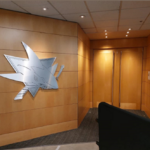
It all began long before the trip itself. The Sharks entered my life in 1990, when I was just starting to discover ice hockey. I still remember what first drew me in: the logo. A shark tearing through a hockey stick with its teeth—simple, aggressive, unforgettable. From that moment, I began following the team through the NHL website in the early 1990s, when real-time stats and results already felt like a window into another world.
Years passed, and technology changed everything. Internet coverage improved, then came smart TVs and streaming services. What never changed was my routine: from October to April, I followed every single Sharks game live, often through sleepless nights. Today, that number stands at 618 consecutive games watched—first online, then through NHL.TV—alongside constant updates, statistics, and reflections shared initially in Italian and, over time, exclusively in English on Twitter and X.
Through that digital space, something unexpected happened. I connected with San Jose journalists, exchanging reactions and interactions over the years. I also came into contact with Sharks President Jonathan Becher—a connection that, over time, would become something far more personal than I could have imagined.
When the 2025–26 NHL schedule was released, I searched for one thing: a stretch of consecutive home games. The Easter period stood out immediately—six games at the SAP Center. That was the moment the idea stopped being a thought and became a plan. After coordinating my request with the NHL for games against Anaheim, Toronto, Nashville, and Chicago, I informed the Sharks organization. The journey was set.
I left Milan Linate on March 31, watching the closing moments of a Sharks victory over St. Louis at the airport gate before boarding. Then came the long crossing: Rome to San Francisco—13 hours suspended between time zones, anticipation, and fatigue. The kind of flight where time loses meaning.
When I finally arrived in San Jose, I drove straight to my hotel, just a short walk from the SAP Center. That evening, everything felt unreal. I attended the “Teal Reimagination” event, where the future of the arena was unveiled. And there, for the first time in person, I metJonathan Becher. Not as a distant figure on a screen, but face to face—warm, welcoming, and genuinely present.
DAY 1
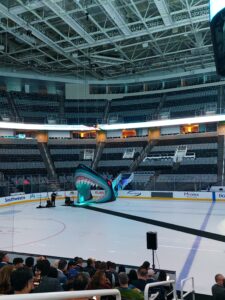
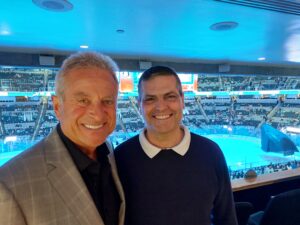
The first game against Anaheim brought something I could never have anticipated: a personal tour of the arena with Jonathan Becher himself. At one point, he turned the visit into a quiet test—player photos lining the corridors from nearly every era of Sharks history. He pointed, I answered. It felt less like a test and more like a shared language.
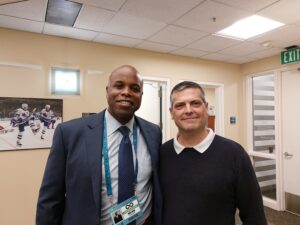
Behind the net before warmups, the rink felt different—closer, louder, alive in a way television never captures. In those same corridors, I metMike Ricci, a name tied deeply to Sharks history, and General ManagerMike Grier. That night, I watched the game from the suite alongside Becher and legendary broadcasterRandy Hahn. Hockey was no longer something distant; it was happening just a few steps away.
DAY 2
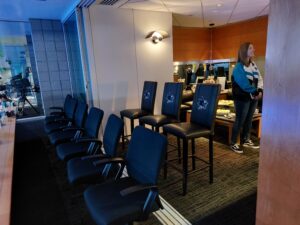
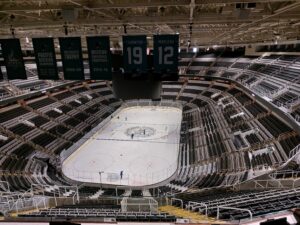
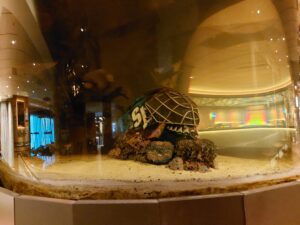
The second day began with something unexpected: a private arena tour, meant for me alone. No group, no crowd—just time inside a building I had known for years only through screens.Sonia Gonzalez-Garciaguided me through it with care and detail that made every corner feel alive with stories.
That evening, I collected my media pass for the game against Toronto. From the so-called “pigeon loft,” high above the ice, the view was sharp but almost surreal—journalists leaning over the game from what felt like the edge of the roof itself. Below, the pace of NHL hockey felt even faster, more intense.
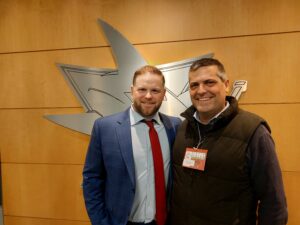
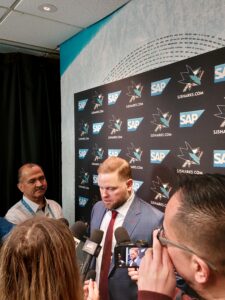
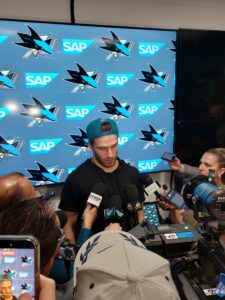
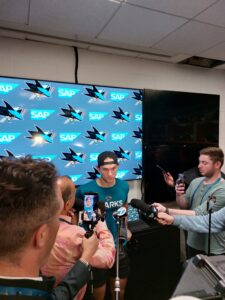
After the final horn, I stepped into the press room, then into the locker room corridors. Interviews, voices, flashes of post-game emotion. Even the head coach paused for a brief exchange. It was no longer observation—it was proximity.

DAY 3
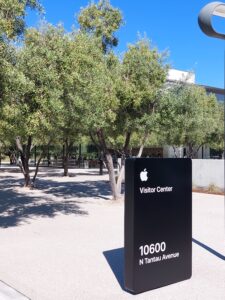
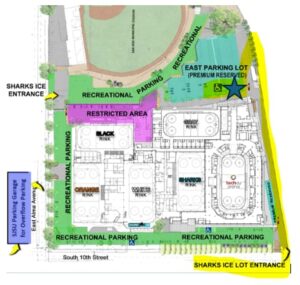
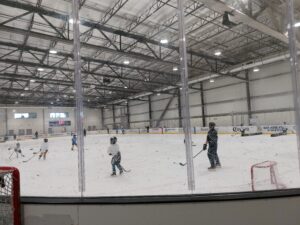
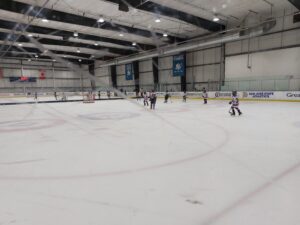
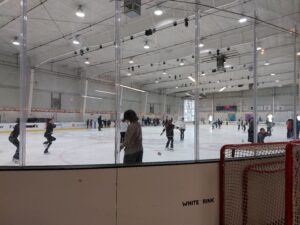
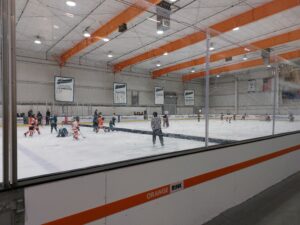
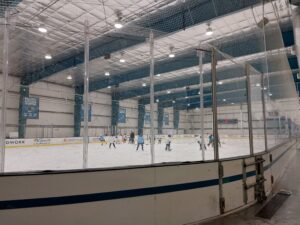
A quieter morning in Cupertino brought a different rhythm at Apple Park, a place defined by precision and silence. But the afternoon returned me to hockey, this time at Tech CU Arena with the San Jose Barracuda. The building, modern and vast, felt like a hidden world of its own, with multiple rinks and a surprisingly intimate atmosphere.
From a suite overlooking the ice, I watched the game against Colorado Eagles. Everything there felt connected: development, future, continuity. Hockey, but from a different angle. I would like to thankJames Collinsfor giving me the opportunity to visit the arena and watch the game against the Colorado Eagles from the suite, andJake Williamsfor the guided tour and his explanations.
DAY 4
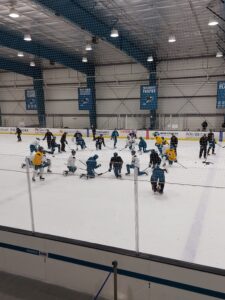
Practice in the morning. Game in the evening. By now, routine had become familiarity: pass, press room, familiar faces, familiar greetings. Yet nothing ever felt repetitive.
That night against Nashville, the rhythm of the SAP Center had already become something recognizable—almost domestic. The post-game press conference with Ryan Warsofsky closed another chapter of the week, but nothing truly felt like an ending yet.
DAY 5
Easter Sunday brought silence. A pause. Shopping, walking, time to absorb everything that had already happened. In a week defined by movement, the stillness mattered just as much.
DAY 6
The final game day began far from hockey, with football: AC Milan against Napoli. Then came the last Sharks game of my trip.
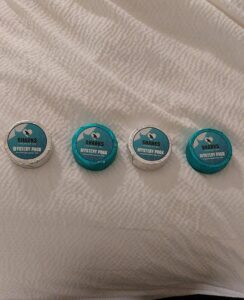
At 5 p.m., I collected my final media pass. I stopped at the Sharks Foundation booth and bought mystery pucks—four small wrapped objects tied to a larger purpose. Inside each one, an unknown signature, a small surprise, and a reminder that sport often connects to something beyond itself.
In the press room, I shared one last meal with journalists I had come to know during the week. Then back to my seat in the “pigeon loft” for the final time.
The game ended as so many others had during this trip: with a Sharks victory. Three wins and one loss while I was in attendance. But the numbers felt secondary now.
After the final interviews and the last press conference, I returned once more to the locker room area. And then, before leaving, Jonathan Becher stepped aside with me. The moment was quiet, almost understated. We said goodbye knowing I was leaving the next day. He thanked me for coming. He said I would be welcome again.
Walking out of the SAP Center that night, I slowed my pace without really deciding to. I looked at the building one last time, the place that had defined the past week. It no longer felt like an arena. It felt like a chapter.

DAY 7
Departure.
San Francisco airport, a full tank in a rental car that had carried me across seven days of memories, and the familiar weight of return. Check-in, security, gate. And then, stillness again—this time before the long flight home.
What remains is not just a record of games watched or places visited. It is the accumulation of moments that, taken together, felt larger than sport itself: conversations, access, trust, and unexpected closeness to something I had followed from afar for more than three decades.
I met people who made the team feel human in a different way—especially Jonathan Becher, who never treated the distance between fan and organization as something fixed. For that, I am deeply grateful. The season continues, with playoffs still ahead. But already, my thoughts move forward. Not to what has ended, but to what comes next.
To San Jose again.